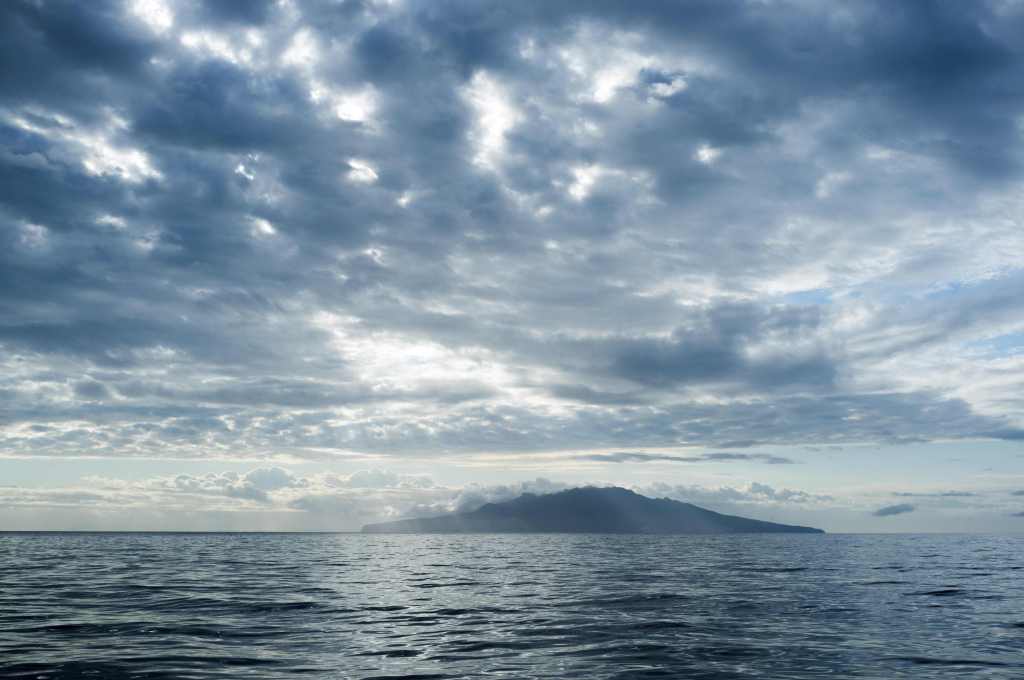
Hauturu/Little Barrier Island, Hauraki Gulf – Image Edin Whitehead
FIELD TRIP 1
THIS TRIP IS NOW FULL
BOAT-BASED SEABIRD BIRDWATCHING TRIP – POOR KNIGHTS ISLANDS & BEYOND
Seabirds, magical islands, and marine mega fauna

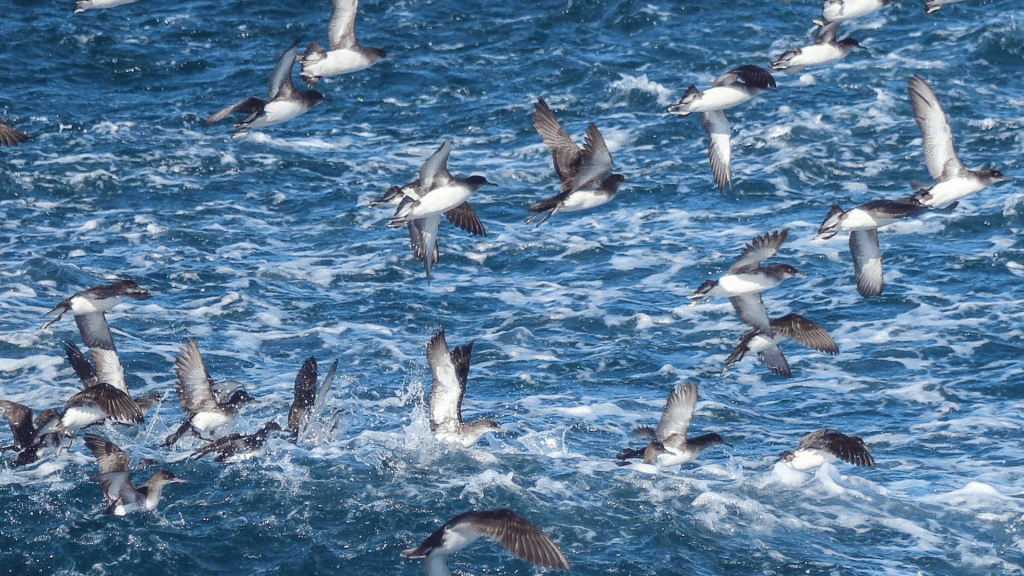
Rako Buller’s Shearwaters. Photo: Edin Whitehead
The rugged Poor Knights Islands are home to rako Buller’s Shearwaters, the only place in the world where these beautiful birds breed. The islands are also home to an abundance of other species – the northernmost colony of Fairy Prions, Pycroft’s, Black-winged and Grey-faced Petrels, Fluttering and Little Shearwaters, Little Penguins and also Australasian Gannets, Red-billed Gulls and White-fronted Terns. The waters surrounding them are also home to an abundance of other species. And not only seabirds.
The Poor Knights Islands are located about 22 km off the East Coast of Northland. The waters out to 800m from the islands are protected as a no-take marine reserve, arguably Aotearoa’s best known, the Poor Knights Islands Marine Reserve. It was established in 1981, with full protection granted in 1998. The islands themselves are Nature Reserves with landings strictly prohibited.
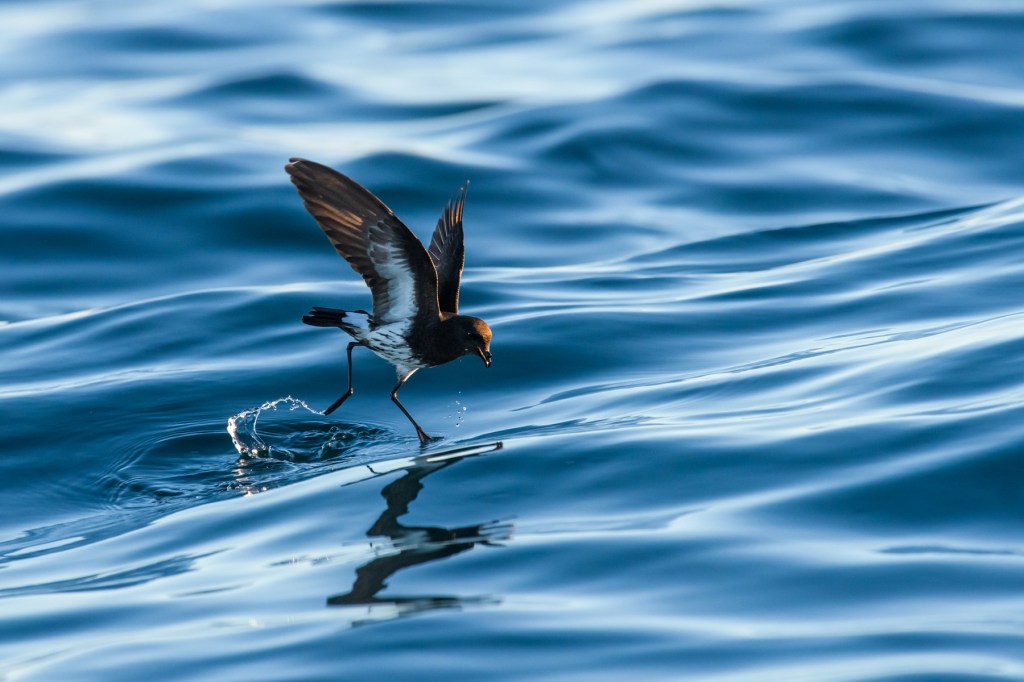
New Zealand Storm-petrel. Photo: Edin Whitehead.
We are working in collaboration with Dive! Tutukaka to run this trip. Using the “chumming” technique, we’ll try to attract as many birds as possible close to the boat to observe different species and, with a bit of luck, the enigmatic New Zealand storm-petrel.
There will also be a photography workshop opportunity for those of you keen to brush up on your photography skills. Three professional wildlife photographers led by Edin Whitehead will be on hand.
This is a full day trip. Lunch will be provided. Boat departure is at Tutukaka on Northland’s East Coast which means a 3 hour bus ride from the University of Auckland pick up point. Pick up at 7AM. We will be on the water for approximately 6 hours.
What to bring: sun protection, rain jacket, water bottles, camera and binoculars, seasickness medication (if you need it).
FIELD TRIP 2
THIS TRIP IS NOW FULL
TAWHARANUI OPEN SANCTUARY – A MODEL FOR SEABIRD RESTORATION
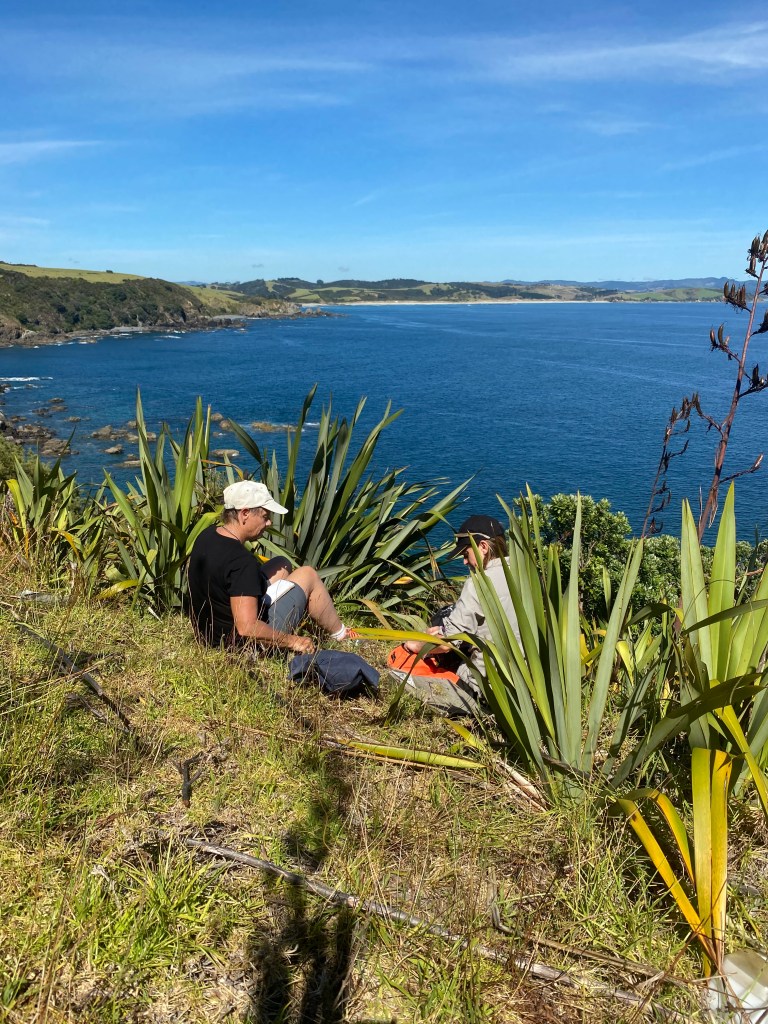
Tāwharanui Open Sanctuary is a unique blend of conservation, recreation and sustainable farming within Tāwharanui Regional Park. The open sanctuary includes mature and regenerating native bush, expansive sandy beaches, spectacular coastal rocky coast and cliffs, wetlands, heritage sites, a marine reserve and extensive areas of rich pasture.
The Tāwharanui Open Sanctuary Society (TOSSI) was formed in 2002 to help make the open sanctuary project a reality. TOSSI works in partnership with the Auckland Council and is involved in volunteer programs, fundraising, education and advocacy. The society is a community-based organisation with charitable status. In 2004 it helped fund a 2.5 km predator-proof fence built across Tāwharanui peninsula to create a refuge for native animals free from pests such as rats, stoats and possums.
In 2009 a very small remnant population of ōi grey-faced petrels was discovered at the park. A Seabird Restoration Plan for TOSSI was developed in 2012. This plan formed the basis of the volunteer program to bring seabirds back to Tāwharanui. Three sound attraction systems, and 80 nest boxes have been installed. These are regularly monitored through each breeding season, effectively from April through to January.
“Seabird recovery is critical to unlocking the biological potential of Tāwharanui.”
Matt Maitland, Senior Ranger Open Sanctuaries, Auckland Council
Tāwharanui is now home to a large and growing population of ōi grey-faced petrel; a healthy breeding population of pakahā fluttering shearwater (the first known on the mainland); the only known breeding pair of titi Cook’s Petrel in a natural burrow on the mainland; as well as breeding populations of kororā little penguin, tara white-fronted tern, tarāpunga red-billed gull, kuaka diving petrel and kāruhiruhi pied shag. Tāwharanui is a model for seabird restoration and conservation. A mark/recapture programme for ōi grey-faced petrel has now banded over 750 birds at Tāwharanui.
Features of the field trip will be:
- The pest-proof fence inspection
- Discussion on predator control management both within and outside the Park
- A closeup view and discussion of the revegetation activities, including restoring threatened plant communities around seabird burrows
- Take a look at the seabird restoration locations and methods: sound attraction systems; nest box design
- Discussion of monitoring methods – mark recapture
- Hear about what Integrated land use within the sanctuary means
- Hear about how the Marine Reserve along the north coast of the peninsula works for biodiversity conservation and people
- Spectacular views of the Hauraki Gulf and nearby islands, major seabird breeding reserves
- A walk-through Ecology Bush
- Opportunity to talk to restoration experts working in the field.
Tawharanui is one-hour’s drive from downtown Auckland. There will be bus transport from the bus stop opposite the symposium venue at University of Auckland. Bus departs at 8AM. It will depart Tawharanui at 3PM and return to Auckland.
Numbers will be limited to 20 participants max. Lunch will be provided.
What to bring: walking shoes, sun protection, rain jacket, water bottles, camera and binoculars.
Click here for more information about Tawharanui and TOSSI


FIELD TRIP 3
THIS TRIP IS NOW FULL
Auckland’s West Coast – working to save remnant colonies in wild locations
Small group trip, packed with knowledge and much reward.
Join one of Aotearoa New Zealand’s leading seabird experts for a tour of the seabird colonies at Te Henga / Bethells Beach on Auckland’s wild west coast. Graeme Taylor has been studying grey-faced petrels there for 30 years, one of the few precious long-term seabird studies undertaken in Aotearoa New Zealand.
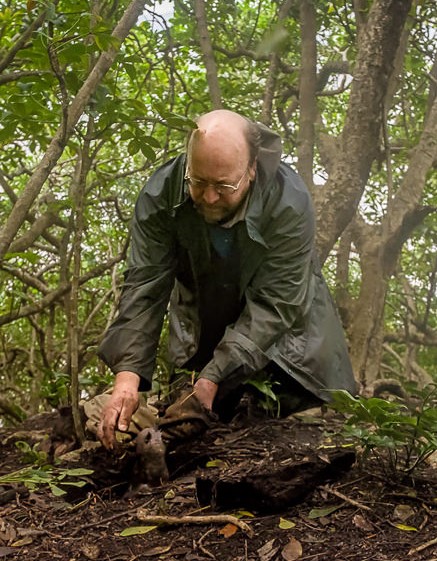
Graeme Taylor at Ihumoana with Grey-faced Petrel in study burrow. Photo: Tony Whitehead.
If there are some adult, grey-faced petrels ashore in burrows by day by mid-April Graeme will be able to get some of those out for band reading and talk about the monitoring project on the island. How the colony has built up over time and the need for ongoing pest control. He will also discuss the status of the birds on site including proportions of breeding birds and non-breeders. This will be a very personal perspective on the value of long-term studies, a remarkable story.
The second part of the field trip will be to transfer to Muriwai where Auckland Council staff to explain the management of the seabird colonies there and challenges of being so close to public and residents. Also, to discuss community leading local penguin conservation and technology innovations.
Limited to 12PAX
Pick up at University of Auckland at 8 am, with a one hour drive to Te Henga / Bethell’s Beach. Be prepared for a wet stream crossing on the beach (not difficult) at low tide en route to the island. Lunch will be provided. Then drive to Muriwai (45mins) and meet with Auckland Council staff. Return to Auckland by 4:30PM.
What to bring: walking shoes, sun protection, rain jacket, water bottles, camera and binoculars.
Field trip 4
MOTUORA – RESTORATION ISLAND
THIS TRIP IS NOW FULL
This Hauraki Gulf island was once a farm but now, with the help of thousands of volunteers, a young forest is growing and with the translocation of birds, reptiles and insects the native ecosystem is rebuilding. Motuora is an 80-hectare island in the Hauraki Gulf, New Zealand. The island reserve lies five km east of Mahurangi Heads and 38 km north of Auckland. Motuora has a long history of human occupation over many centuries and was used for pastoral farming through most of the last century. Much of the original coastal forest was cleared long ago leaving only remnant pohutukawa and karo/mahoe scrub growing on coastal cliffs.
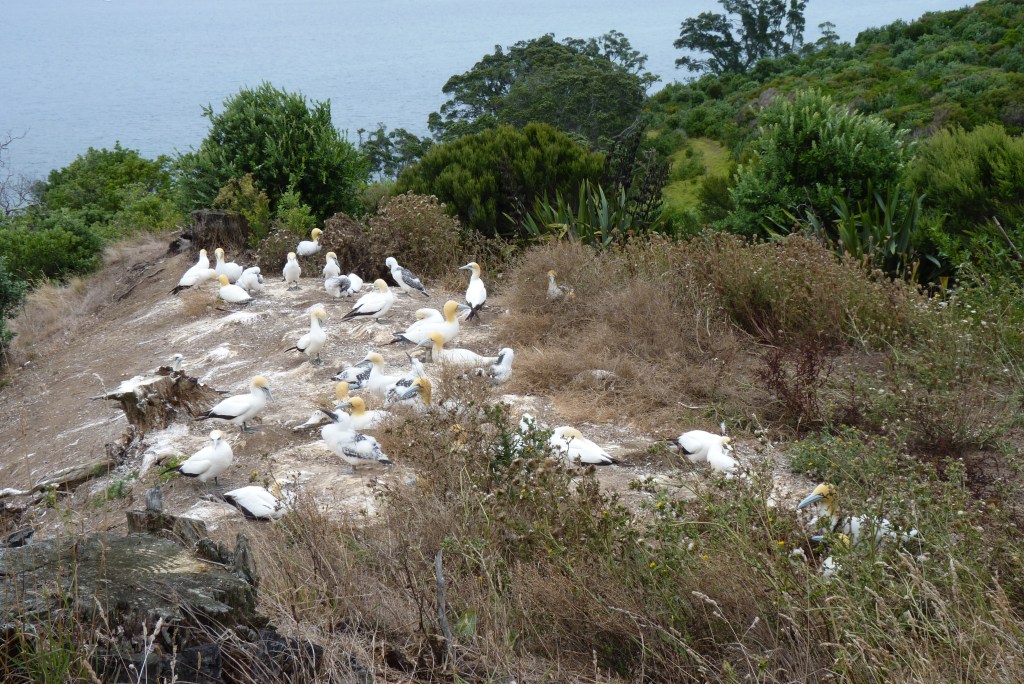
Australasian gannets at Motuora. Photo: Kay Milton
In 1990 the focus for the island changed and a volunteer-led restoration programme began. Restoration efforts gained momentum in 1995 with the formation of the Motuora Restoration Society. The Society managed the island, including the campsite, under an agreement with the Department of Conservation (DOC) until 2016. In March of 2016 DOC resumed full management, making a new agreement with the Motuora Restoration Society to continue to manage the restoration of the island’s flora and fauna.
Motuora is special, not just for its secluded picnic spots and clear waters, but for the fact that it has remained free of mammalian predators despite the Island’s long history of occupation and farming. There are no rats, mice, mustelids (stoats, ferrets or weasels) or feral cats. This makes Motuora ideal for native ecosystem restoration and for the creation of a safe habitat for endangered species. Since 1999 Motuora has been used as a “kiwi creche“ for Northland brown kiwi by Operation Nest-Egg, and, over subsequent years, pōpokatea (whiteheads), diving petrels, Pycroft’s petrels, wetapunga, Duvaucels, Raukawa and Pacific geckos and shore skinks have been translocated to the Island. In addition, gannets and fluttering shearwaters have been attracted by broadcasting calls and decoys and are now nesting.
Join the restoration society’s chairperson John Stewart, to visit and learn more about this very successful restoration project.
To reach Motuora it is a one-hour’s drive from downtown Auckland, then water-taxi to the island. There will be bus transport from the bus stop opposite the symposium venue at University of Auckland. Bus departs at 8 AM. It will depart Motuora at 3PM for Sandspit, then bus to return to Auckland.
Numbers will be limited to 10 participants max. Lunch will be provided.
NB: The cost for the water taxi is NZ$74.00 to NZ$80.60 per person (dependent on numbers)
What to bring: walking shoes, sun protection, rain jacket, water bottles, camera and binoculars.
Be prepared to climb down a short ladder off the side of the water taxi and into the water to wade ashore. Water depth at worst case can be waist deep, but usually about knee deep. Bring a towel and clothing so you can change if need be. On departure you need to be fit enough to pull yourself onto the first step of the ladder which can be near waist height.
ADDITIONAL OPPORTUNITIES
As places in symposium-sponsored field trips fill up we recommend the following as options for Thursday 17 April. Please note, these require you to book and pay for your own participation.
OPTION ONE – TIRITIRI MATANGI ISLAND
Lying just an hour from Aotearoa’s largest city, this island sanctuary is home to an unrivalled range of wildlife living their best lives. Take a guided walk to learn about the island’s wildlife and original spade brigade, or explore it at your own pace.
To book go to Tiritiri Matangi Island Ferry Service | Island Wildlife Sanctuary | Hauraki Gulf | Explore Group
Departing Viaduct Harbour, Downtown Auckland – Please note this trip now departs Auckland from the Explore Booking Kiosk in Viaduct Harbour
Cost: NZ$95 per person (adult fare) – it pays to book well in advance.
Times: Wednesday – Friday
Departs Auckland: 9:00am | via Gulf Harbour: 9:55am | Arrives Tiritiri Matangi Island: 10:20am
Departs Tiritiri Matangi Island: 2:40pm | via Gulf Harbour: 3:05pm | Arrives Auckland: 4:00pm
OPTION TWO – AUCKLAND WHALE AND DOLPHIN SAFARIS
Auckland Whale & Dolphin Safari | Whale Watching Tours in New Zealand
From $209 NZD – you can change or cancel your booking up to 6pm the day before travel, free of charge.
Safaris operate seven days a week with one departure time.
- Check-in at at the top of the boarding ramp by the AWADS boat, Viaduct Basin, Downtown Auckland closes 1:15pm; Safari departs from Viaduct Basin 1:30pm; Returns to Viaduct Basin 6:00pm
ADDITIONAL SEABIRD TRIPS (outside symposium dates)

THE PETREL STATION SEABIRD TOURS – 12 & 18 APRIL 2025 – TUTUKAKA
The Petrel Station seabird tours and research is putting on two special pelagic seabird tours specifically for attendees of the Oceania Seabird Symposium in April 2025.
The Petrel Station seabird tours have a well-earned international reputation as one of the best seabird tours in New Zealand, and the world, for birders to encounter a diverse range of stunning seabirds, with 69 seabird species recorded to date. Based out of Tutukaka (in Northland New Zealand) these tours offer a very unique seabird experience, and showcase why New Zealand is known as the seabird capital of the world!
The tour dates are:
Saturday 12 April and Friday, 18 April 2025
We will be departing at 7am , and the tour will run for 9 to 10 hours which means plenty of time on the ocean to enjoy the seabirds.
There are only 7 spaces available on each day and spaces will be allocated on a first booked basis, and payment will need to be made upon booking to secure your place. The cost will be NZ$350 per/person. The tour needs to be full to proceed, and is weather dependent. You will also need to ensure the tour is suitable for you in regard to stability etc. (see more in our FAQs).
If you’re interested in joining us then visit our website and complete the online booking request form. You can also find out lots of info on the tours, the seabirds we encounter, past tour reports, the research, FAQ’s, and lots more on our website as well.
www.thepetrelstation.nz
It’s always a great day out and the best way to experience these stunning seabirds is out on the ocean, in their world.

 Oceania Seabirds 2025: talking, listening & hands-on